Between art, perfect places, and pulsating rhythms
Where is home? Who am we?
Where is home? Who am we?
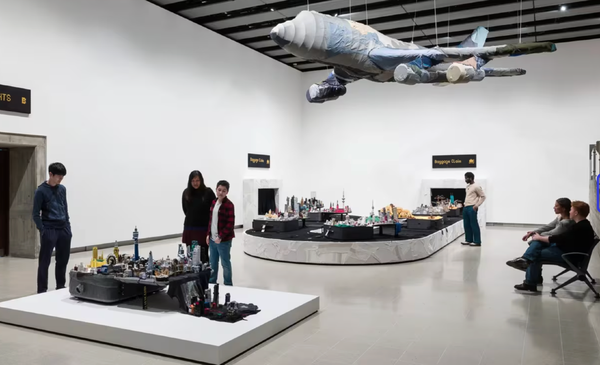
In London, the question is rhetorical. This is a city of immigrants. That’s why Do Ho Suh’s exhibition at Tate Modern felt especially at home here. The Korean-born, suitcase-living artist quite literally sewed his former apartments out of translucent fabric. At first glance — tents. At second — architecture. A home you can fold and carry. Or maybe a home that exists only in the memory of the body. Home as a fragile, demountable, transparent construction.
Do Ho Suh lives between Seoul, New York and London, dragging the shadows of his rooms behind him. He recreates corridors, kitchens, bathrooms and re-stitches them with ritualistic care. These aren’t buildings — they’re hauntings. Interior organs of belonging, stitched from light.
What struck me most was the Bridge Project — his paper-thin dream home suspended mid-air. Begun in 1999, it grew from a fantasy: what if you could live on a bridge between three cities you once called home? A place of longing but impossible location. Phase one: a speculative bridge across the Pacific between Seoul and New York. Phase two: London enters the blueprint as the new centre. Suh finds the “geographic midpoint” in the Arctic Ocean — a no-man’s-land, contested by states and home to the Indigenous Chukchi and Iñupiat people.
This unrealisability is precisely what made the project moving: the perfect home placed in a zone of climate precarity and political ambiguity, where nothing belongs to anyone. Suh builds an ethical dilemma: who gets to live on that bridge? Can a perfect home even exist when millions are displaced? It’s a near-dystopian rendering of how to live in three cities at once — and in none at all. I think I need that bridge too. I’m tired of layovers in Istanbul.