Why Ruined Dresses and Faux Stains Rule the Barbican Right Now
And yes — if I had a pound for every Margiela in a show, I’d be funding the Barbican myself by now.
It sometimes feels like all of fashion London comes out of Central Saint Martins — but here, it makes sense.
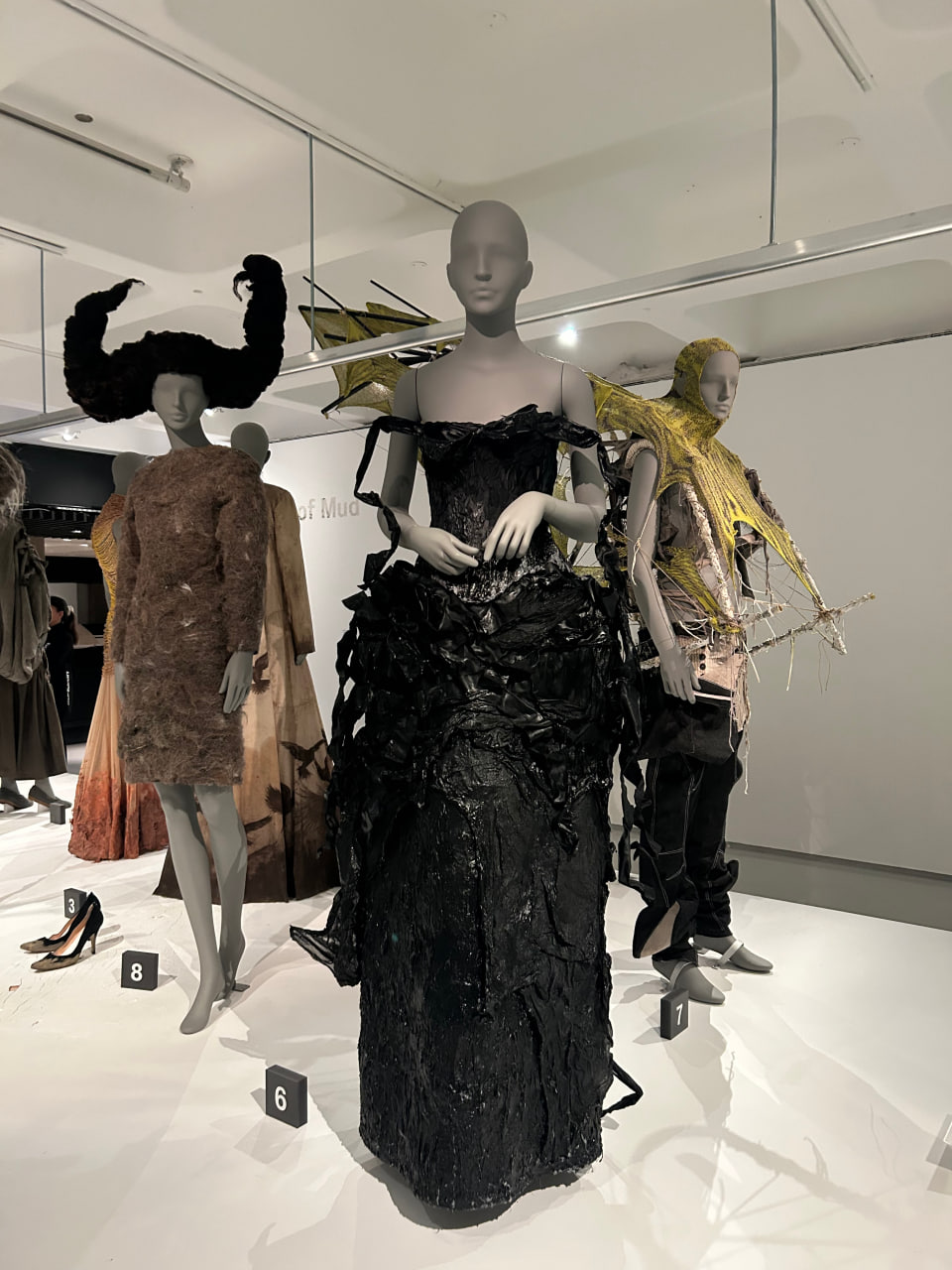
The Barbican’s exhibition Dirty Looks gathers everything once dismissed as a mistake: torn dresses, mold as ornament, shiny trash, and Dilara Fındıkoğlu’s apocalyptic black wedding gown, which looks as if it had been dragged through fire and still survived.
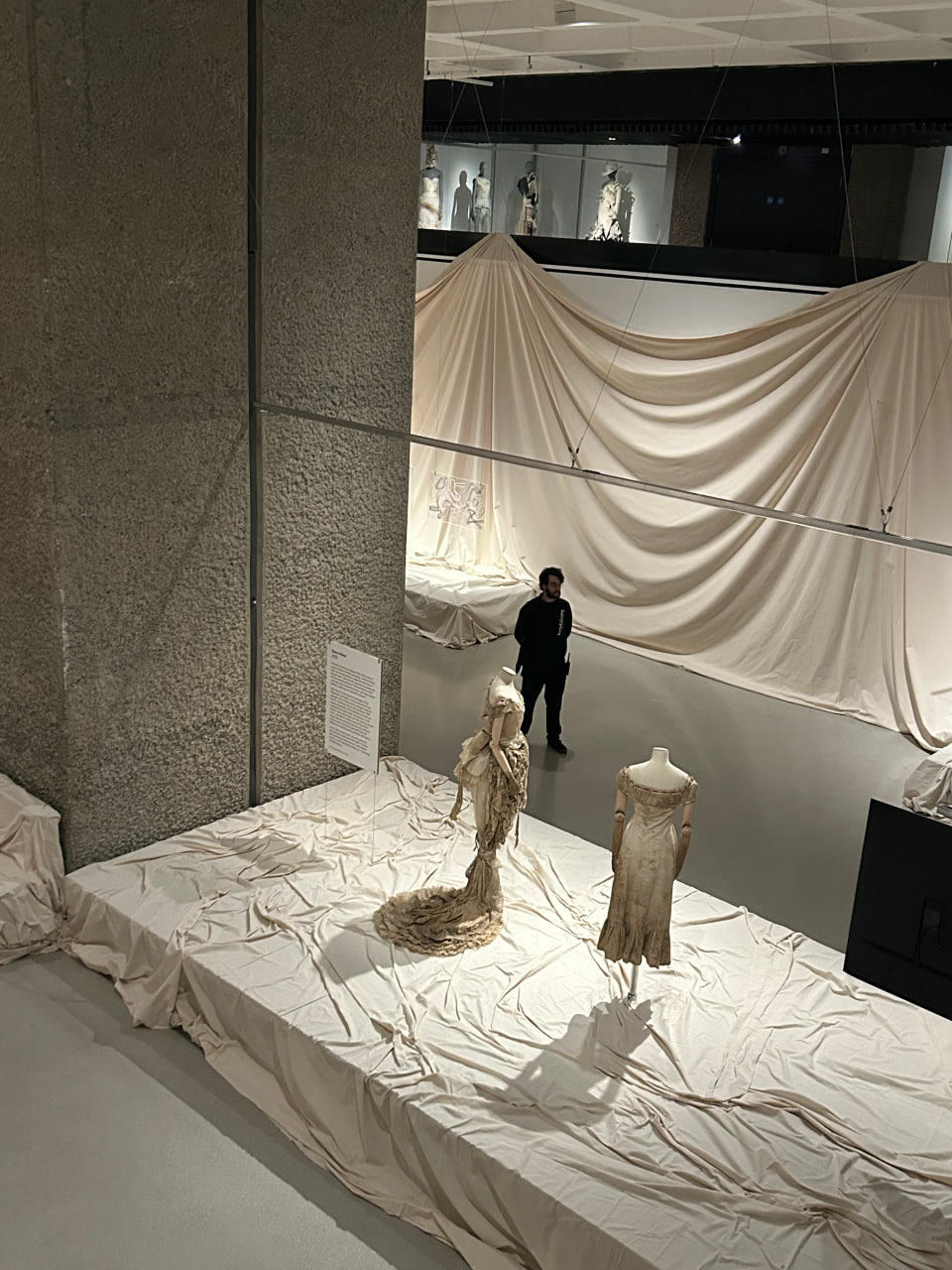
The show reads like a narrative on how fashion learned to turn scraps into manifestos. Upstairs is devoted to the aesthetics of ruin: evening gowns with scorched hems and unravelled seams, silk embroidered with trompe-l’œil stains in metallic thread, burn marks turned into delicate ornament. Hussein Chalayan presents a garment literally boiled and acid-aged into fragility. Maison Margiela exhibits a couture gown fashioned from what looks like a black trash bag, paired with a ceramic bodice. Alexander McQueen turns burnt holes in silk into lace-like tracery. These works perform ruin as a form of spectacle, pushing the question: why do we still equate beauty with perfection?
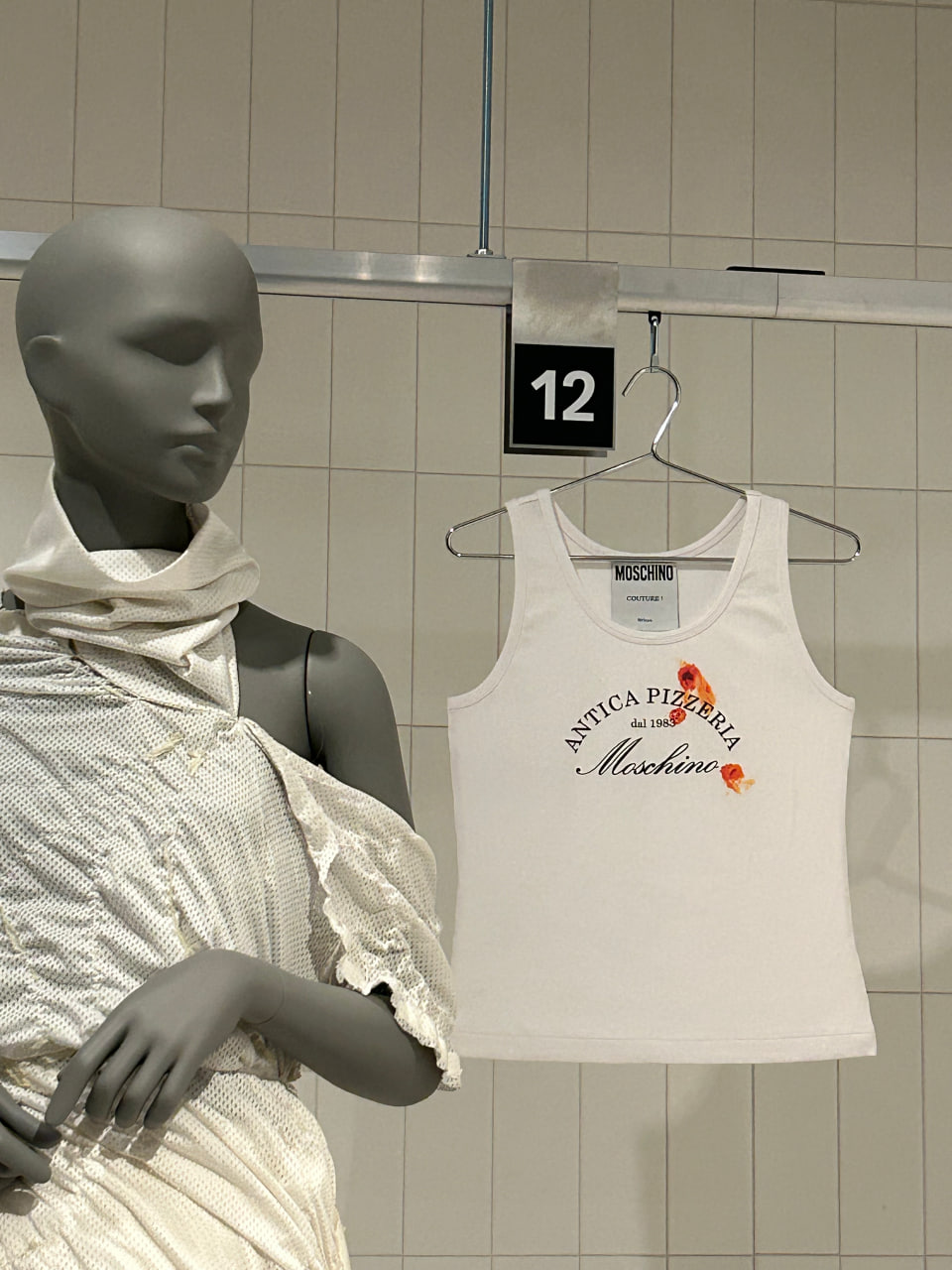
The section Stains as Ornaments extends the point with garments patterned by wine spills, lipstick traces, and faux dirt, made precious through gold thread embroidery. Dirt becomes decoration, reminding us that what is usually erased can itself be made luxury.
Another section, Leaky Bodies, turns to the abject. Transparent fabrics shimmer like sweat, while garments reference Kristeva’s ideas of fluidity and cultural anxiety. Fashion here acknowledges what it usually represses — that bodies leak, stain, age, and decay. The irony, of course, is that all this is displayed on mannequins cut to 90-60-90, as if to remind us that the fantasy of control remains intact.
The narrative situates these gestures historically. Torn denim, the bohemians of 19th-century Paris, surrealists of the 1930s, hippies of the 1960s, punks of the 1970s, grunge in the 1990s — all aligned wear and dirt with authenticity and rebellion. Vivienne Westwood’s Nostalgia of Mud and the radical imperfection of Kawakubo and Yamamoto in 1982 are recontextualised here, linked to the Japanese philosophy of wabi-sabi. As Brian Dillon once wrote in Ruin Lust: “the ruin outlives us, and loosens us from the grip of punctual chronologies, setting ourselves adrift in time.”
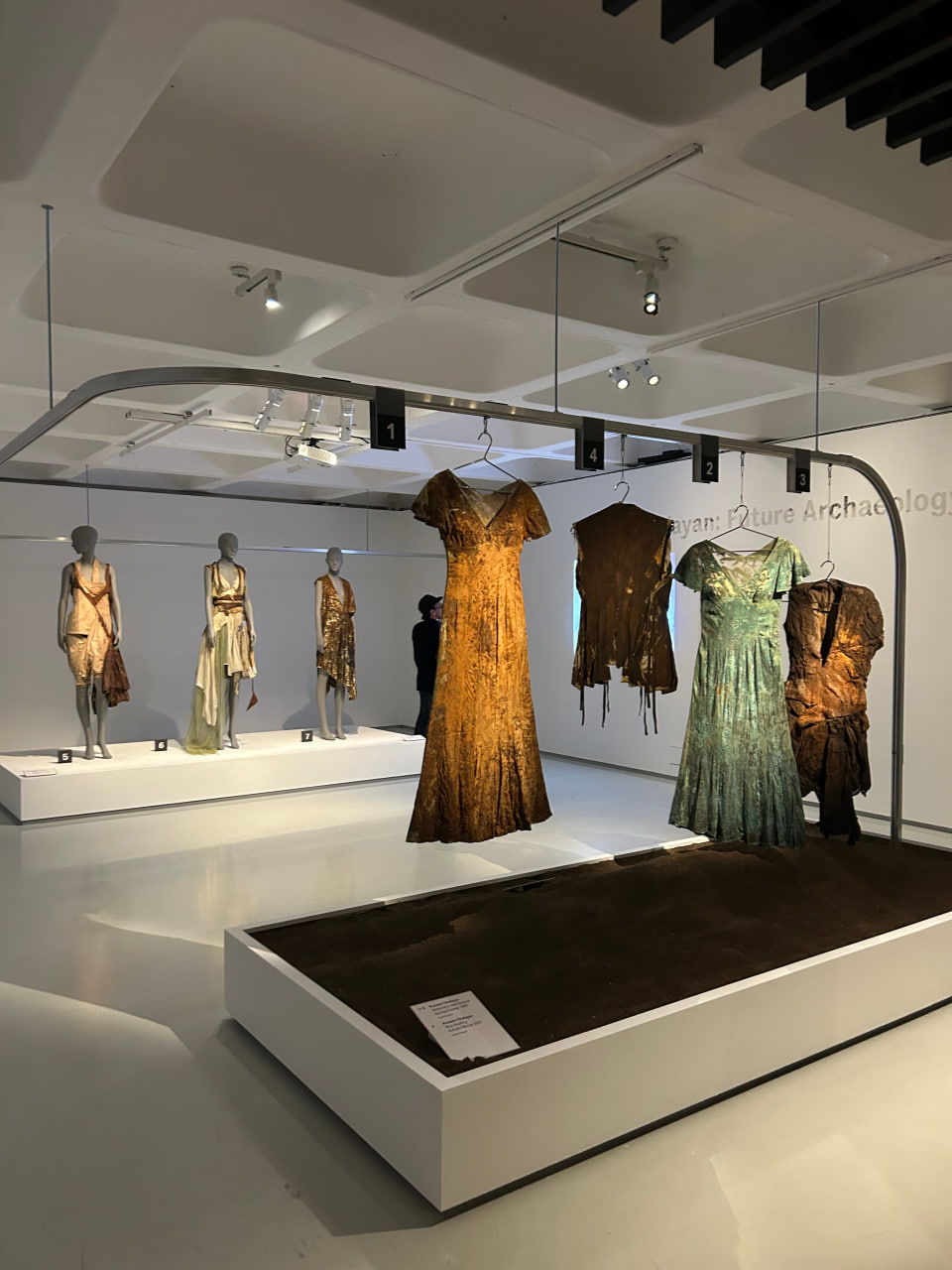
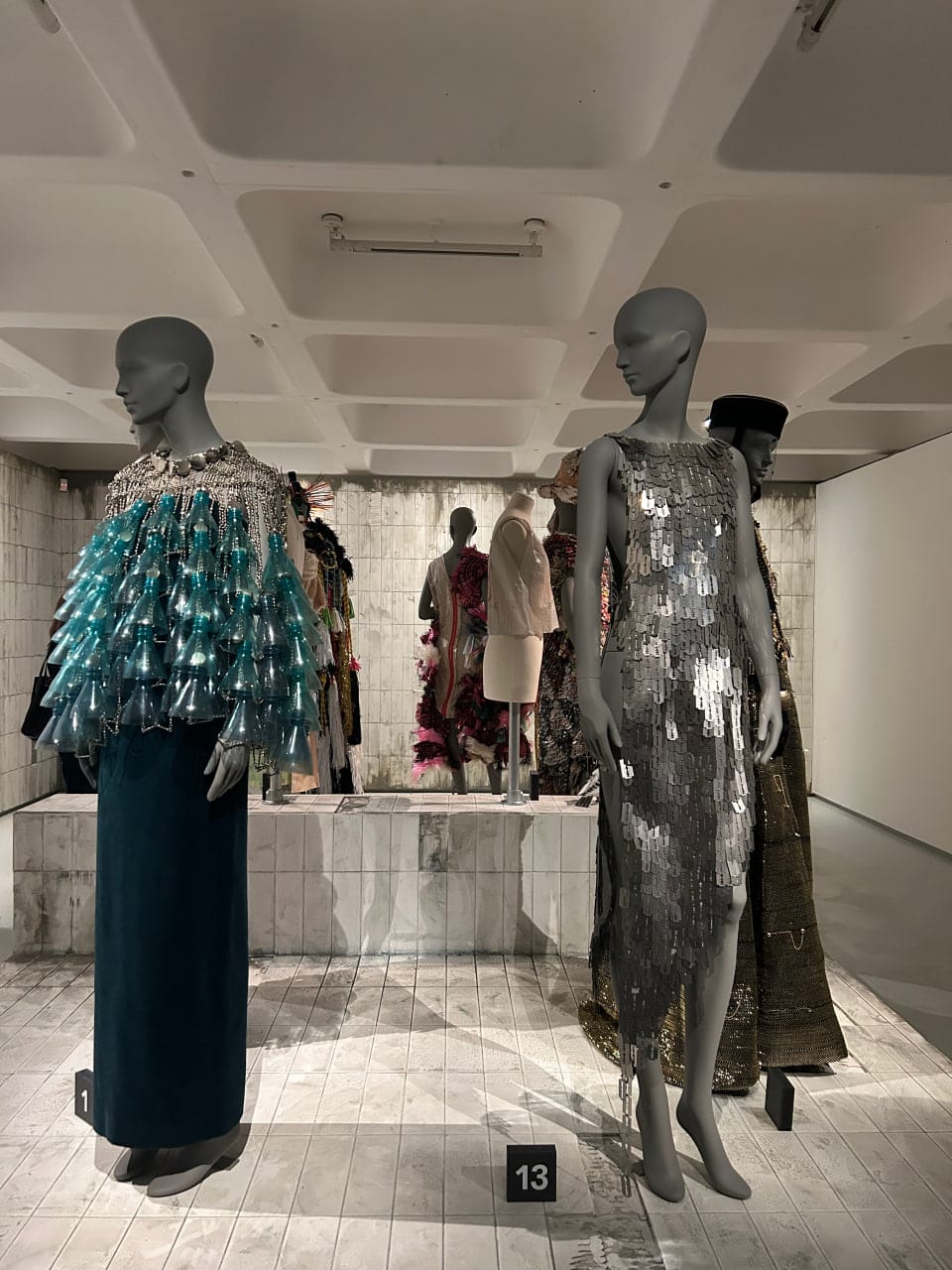
Downstairs, the focus shifts to the present and future. The section Fashioning Excess interrogates overproduction and waste. Solitude Studios present algae-dyed garments and salvaged textiles, Yuima Nakazato showcases 3D-printed outfits from recycled plastic polymers, while IAMISIGO works with African artisans to transform textile waste into sculptural forms. The curators call this the politics of “waste colonialism”: European and American clothing waste exported en masse to Ghana or Chile. Here, dirt is no longer metaphor but lived material reality.
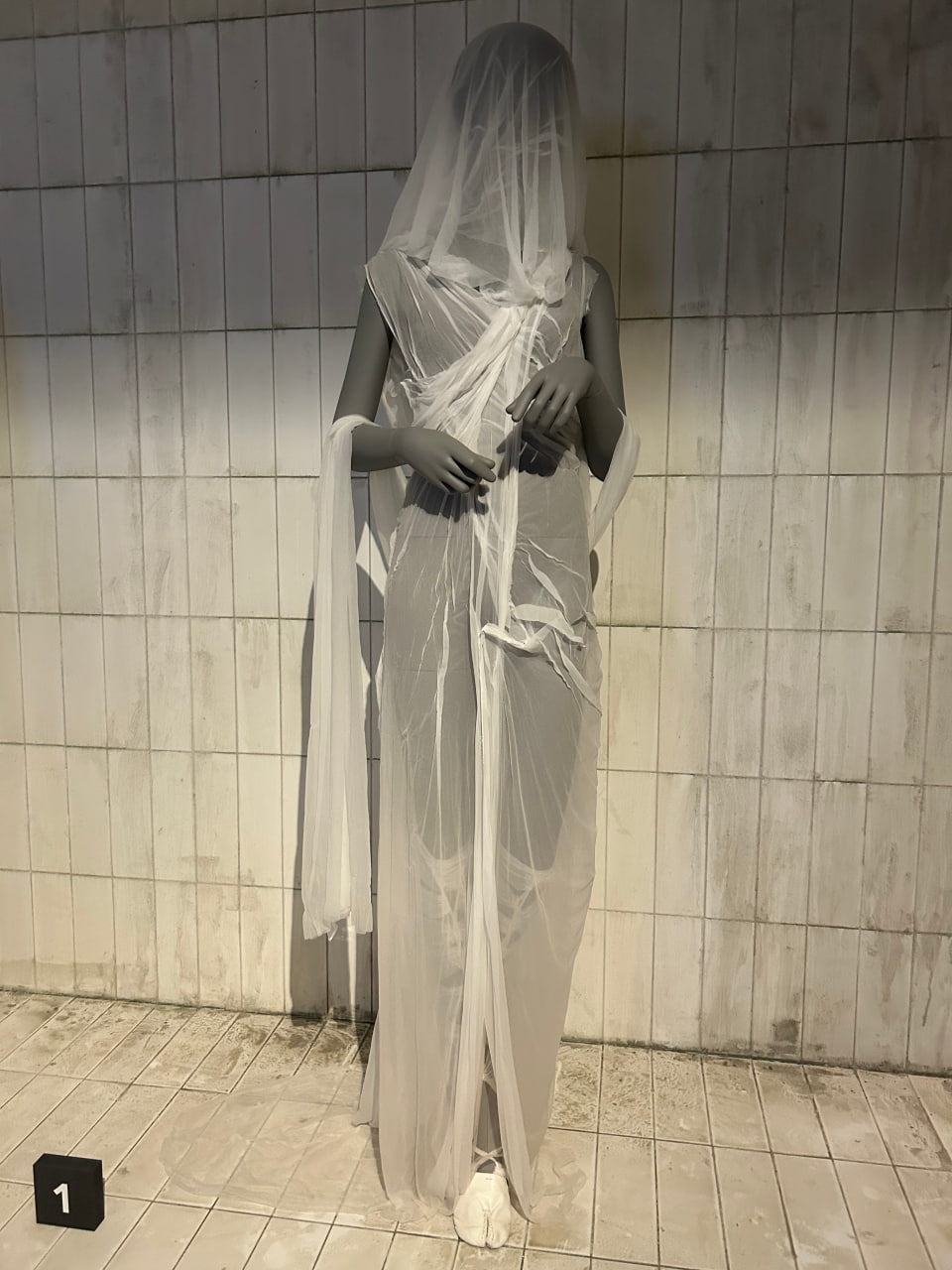
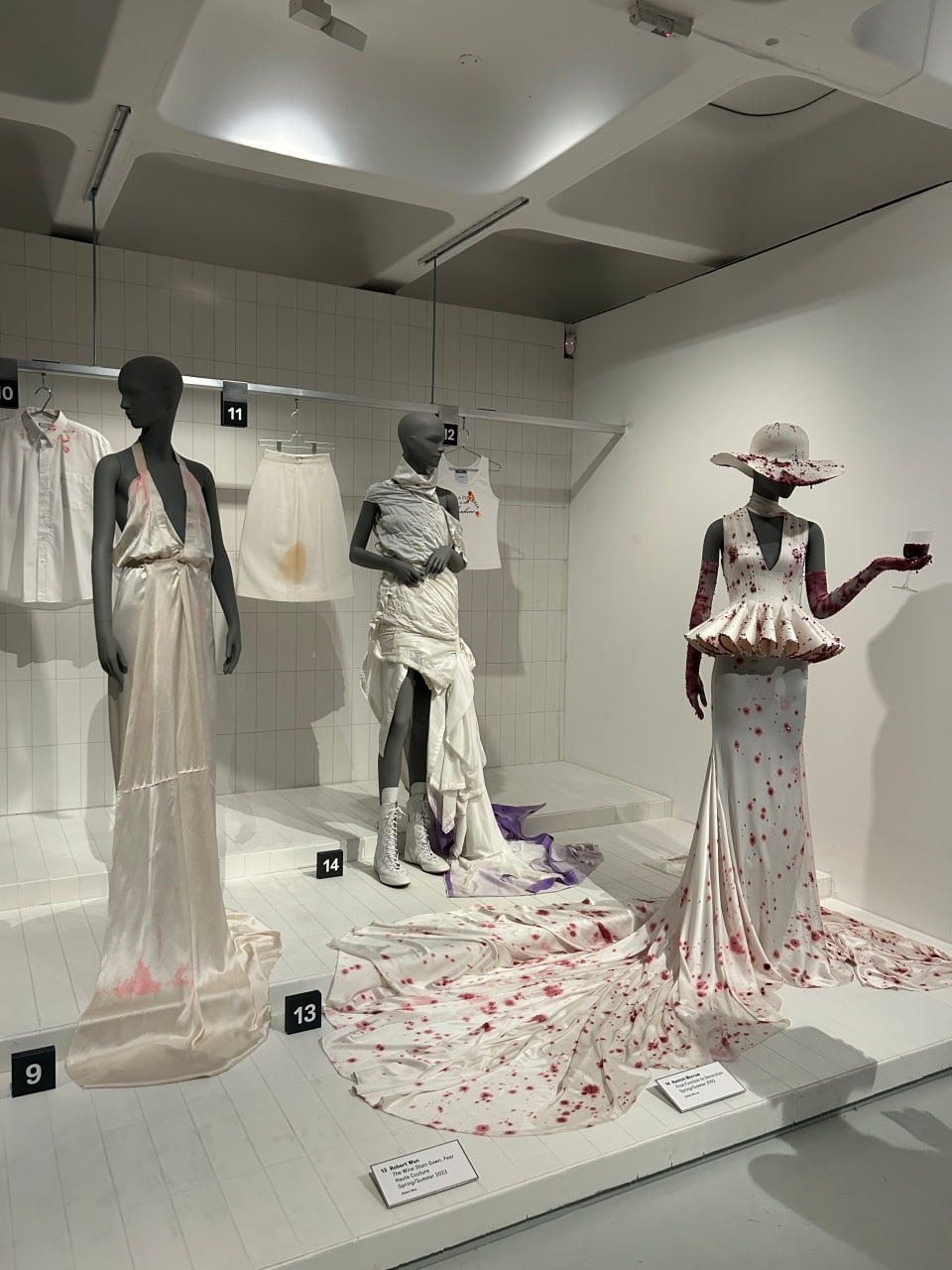
Officially, the exhibition is also about the body and its vulnerability. But, of course, all these artful folds of sheer fabric sit beautifully on mannequins sized 90-60-90. Beauty, though, lives less in sterility than in what spills over the edges.