Memory, Urban Change and the Art of Yin Xiuzhen
Yin Xiuzhen doesn't use the word secondhand.
She says "worn" — clothes that have been worn carry information, like a second skin imprinted with social meaning. Thirty years of practice, first major UK survey, lower floor of the Hayward.
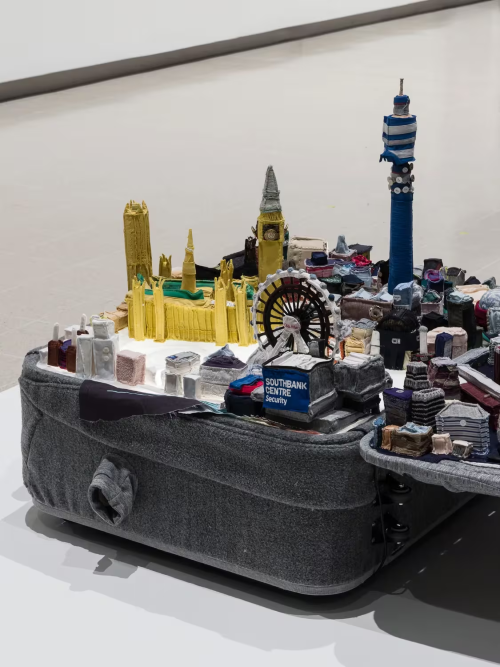
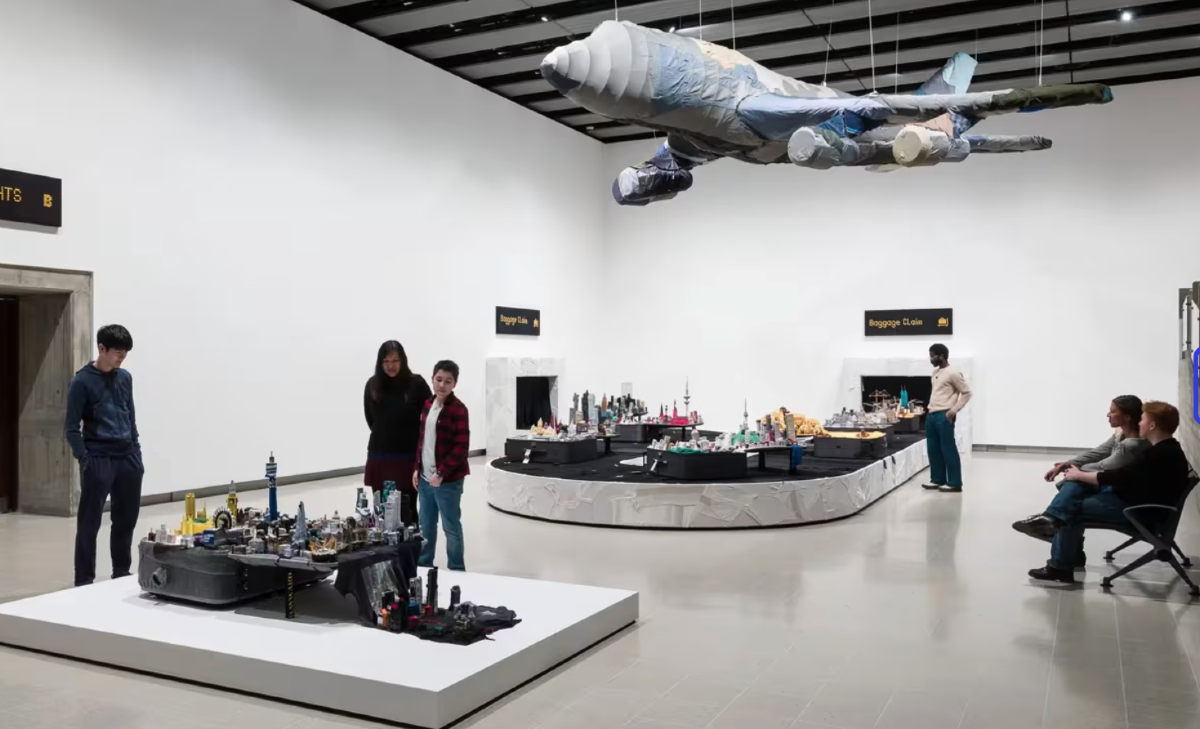
You walk in and you're in an airport arrivals hall. Baggage carousel, airport chairs, trolleys. On the conveyor belt — suitcases wrapped in fabric, each one containing a miniature city made from scraps of clothing. New York, Hamburg, Melbourne, Seoul, Brussels, Shenzhen. And London, made specially for this show from nearly 180 items of clothing collected through a donation box at the Southbank Centre. Staff members stopping to point out their own shirts inside the sculpture. Above it all — a full-size airplane fuselage built entirely from discarded clothes.
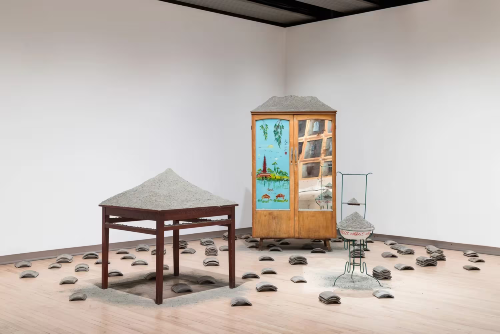
Dress Box, 1995. The artist collected thirty years of her own clothes, placed them in her father's wooden chest, sealed it with cement. Bronze plaque inside the lid. You can't open it and that's the point.
She grew up during the Cultural Revolution, when new clothes were a rarity. Her mother worked in a clothing factory and brought home fabric scraps every lunar new year to sew clothes for the family. That's where it started. Then she watched Beijing get demolished and rebuilt around her, studio evicted more than once, traditional houses replaced by tower blocks. The clothes became a way to hold what the city kept erasing.
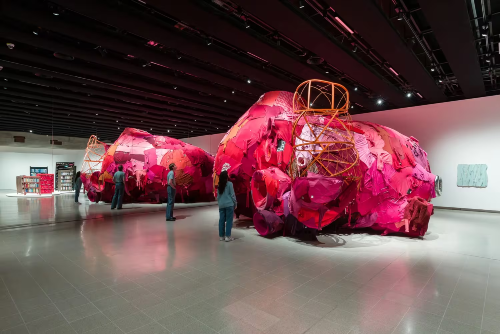
The centrepiece is a new commission — A Heart to Heart. A 25-foot structure made from fabric and steel shaped like a human heart, with rugs and cushions inside. You can enter it. Red, pink, purple, orange garments stretched over a steel frame. Next to a large mirror. "I think it's very important for people to be able to sit down and talk through their hearts," she said at the opening. "We are living in a chaotic, volatile world."
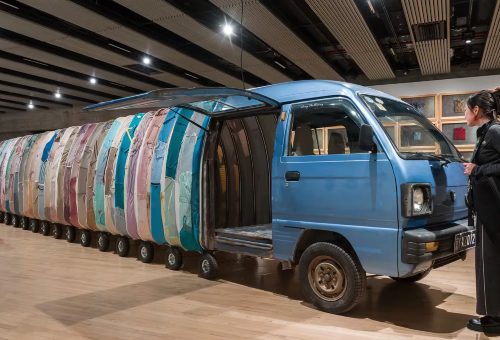
Monumental, witty, and quietly devastating.
Hayward Gallery, until 3 May 2026.