The Many Lives of Lee Miller: Beauty, Surrealism, and the Horror of War
I spent two months trying to write about the Lee Miller exhibition at Tate Britain. Only now do I understand why it was so difficult.
I spent two months trying to write about the Lee Miller exhibition at Tate Britain. Only now do I understand why it was so difficult. At a moment of global exhaustion from cultural content — from endless visual noise, from artworks that blur into one colourful mass after a week of Frieze — you suddenly don’t find inspiration.
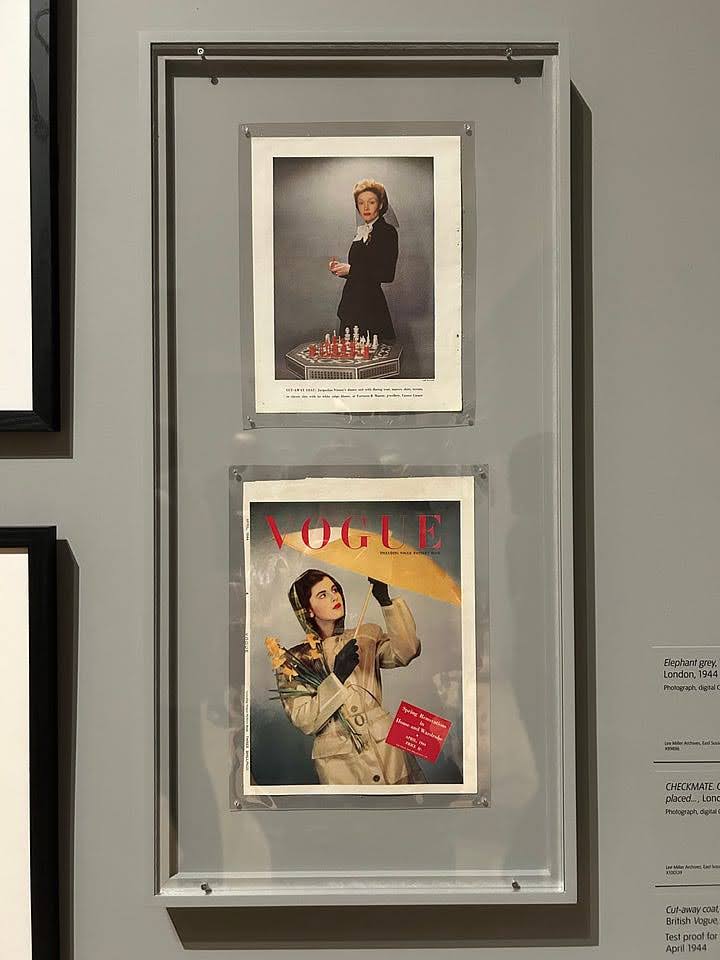
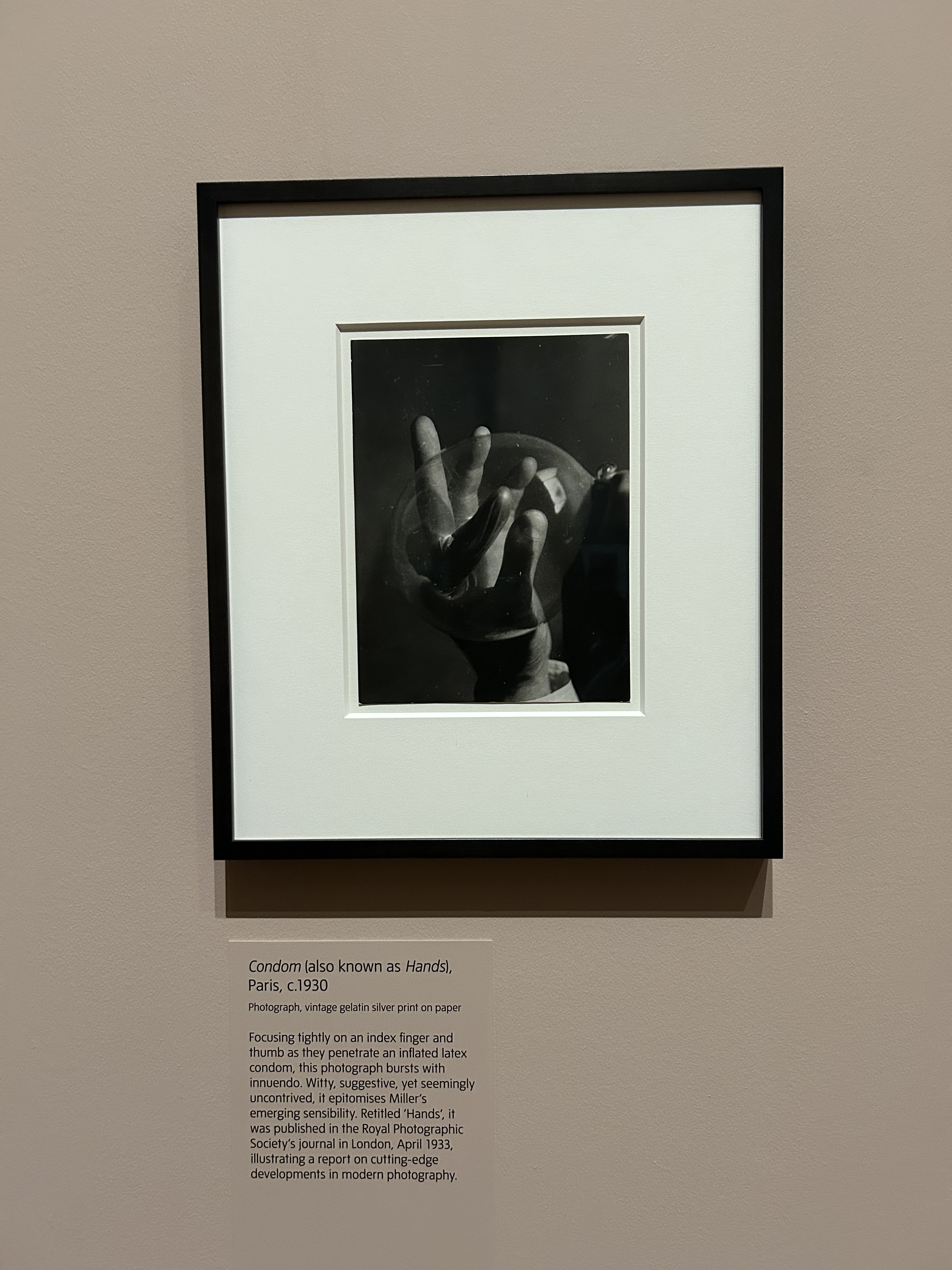
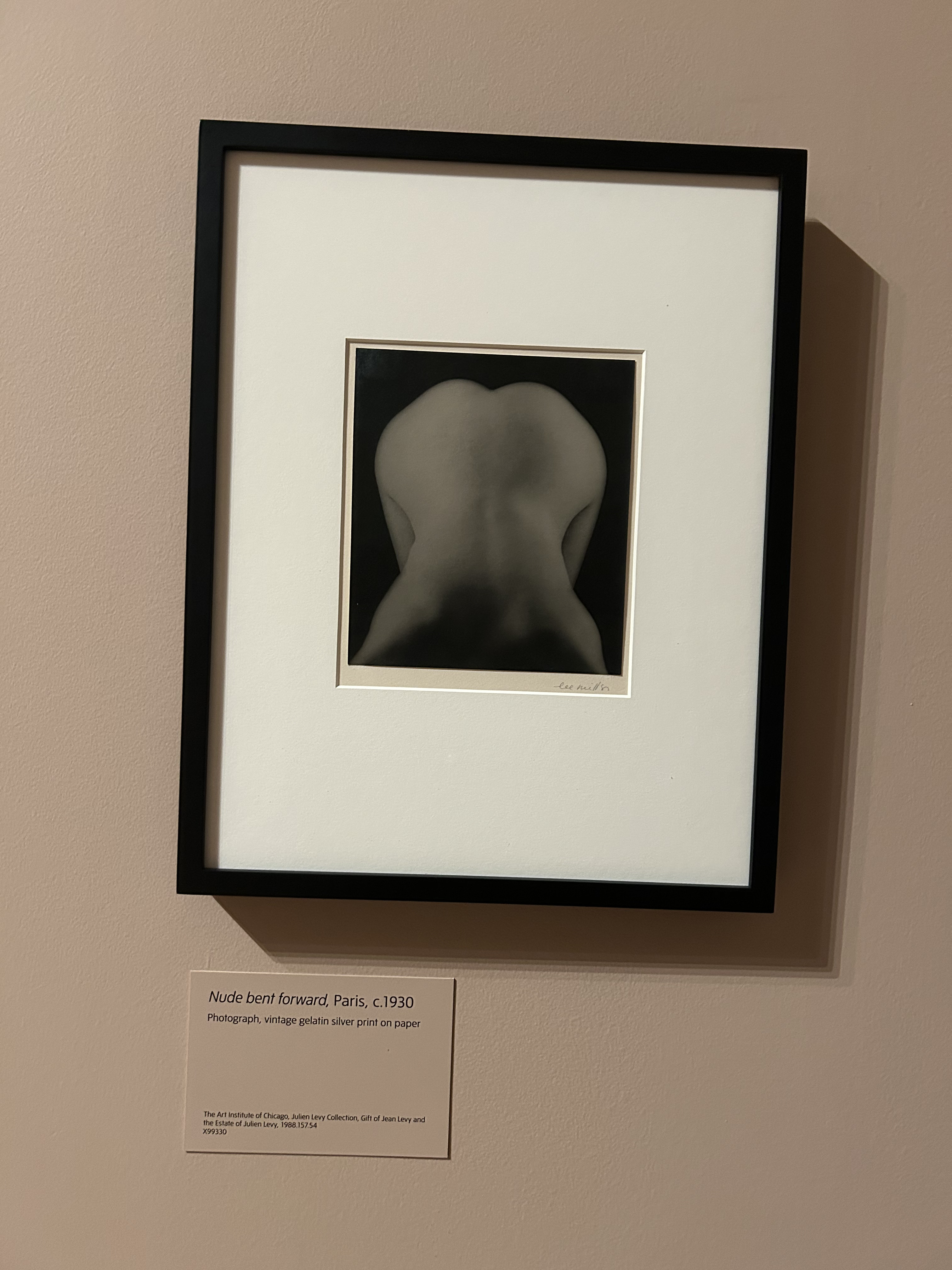
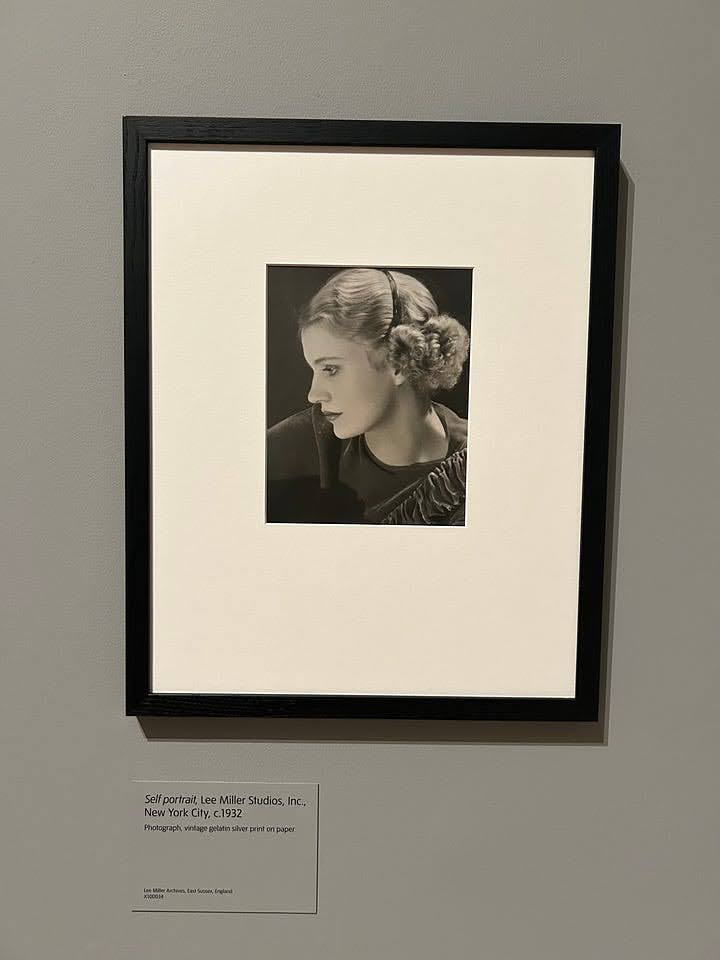
Lee Miller was a woman who lived several lives at once: model for American Vogue, muse and collaborator of Man Ray, surrealist photographer, artist, reporter, war correspondent. She lived in Paris, moved through the bohemian circles, loved, made mistakes, married an Egyptian millionaire, took elegant portraits and advertising shots. All of this forms a prelude that lulls you into expecting a pleasant show of beautiful photographs — and then hits you straight in the gut.
The descent begins with her wartime uniform and a trigger warning before the room of concentration camp photographs and the self-portrait in Hitler’s bathtub. Miller documented the liberation of Paris, the work of medical units, hospitals, destroyed cities, the horrors of Dachau and Buchenwald. There are images in the exhibition that are genuinely difficult to look at: human remains, burned bodies, faces emptied of life. They are merciless in their level of detail.
The usual distance between viewer and artwork collapses completely. Photography becomes testimony, and testimony becomes an unbearable experience. In my case — tears on the museum steps. That’s what happens when you walk into an exhibition unprepared. I should have read the wall text or at least watched the Cate Blanchett film.
Miller moved from being a “pretty woman with a camera” — a label she despised — to a reporter who lived through the war. From bohemian, erotic Paris to the stark documentary reality of German camps. The exhibition was not simply the biography of a woman, but the story of a human being trying to preserve humanity under inhuman conditions.