The Gastronomical Me: How M.F.K. Fisher Turns Eating into Experience
I have a particular respect for authors who write about food not as a list of ingredients but as a cultural state of being.
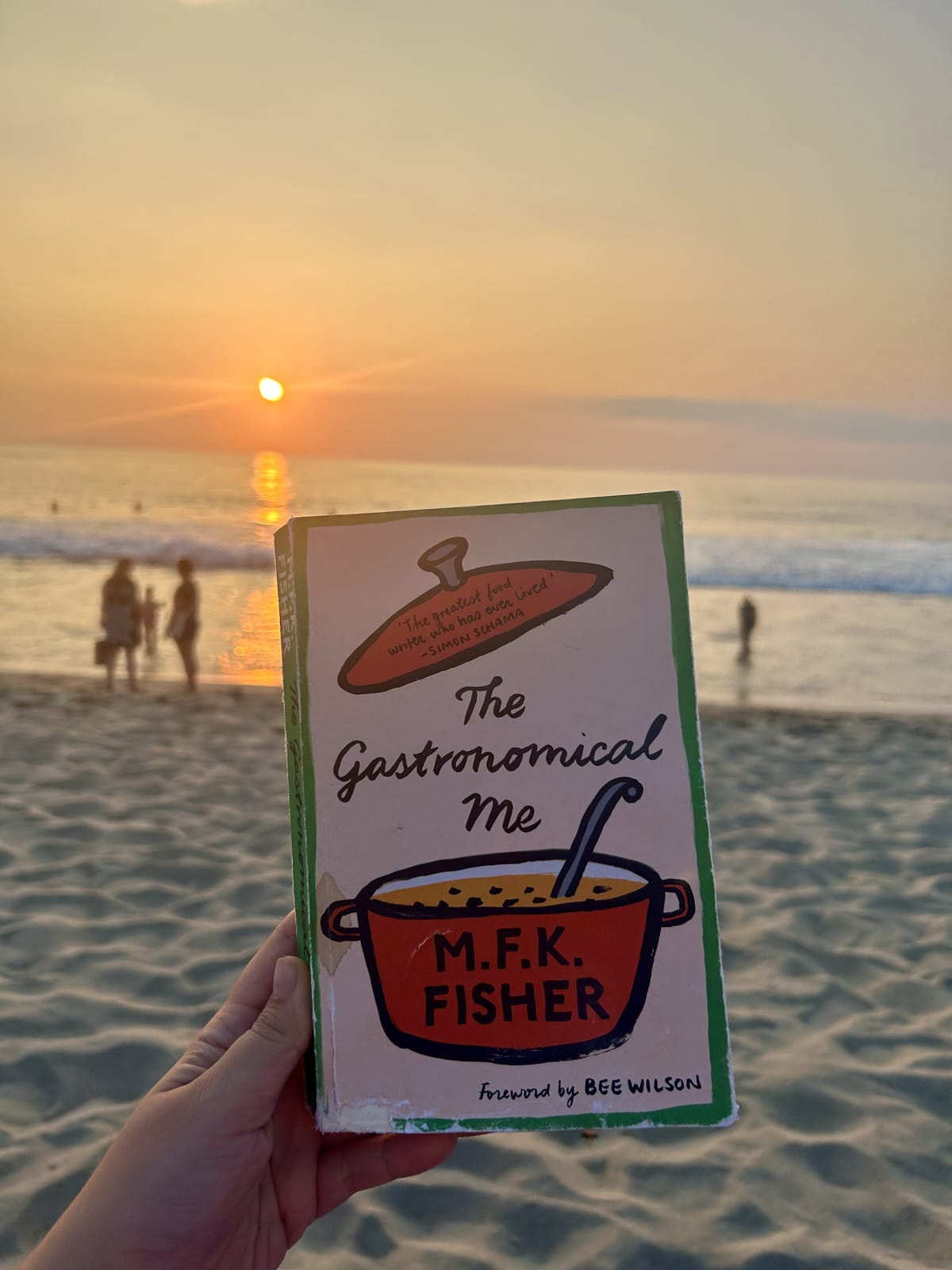
I have a particular respect for authors who write about food not as a list of ingredients but as a cultural state of being. And, more importantly, about appetite — for butter as much as for life itself. The American food writer Mary Frances Kennedy Fisher Parrish Friede, known to us as M.F.K. Fisher, does exactly that in The Gastronomical Me.
In 1929, she left America for France not in search of freedom but of flavour: real butter, fish, cheese, wine. Her descriptions provoke a visceral reaction — you can feel your mouth water. But the real power of the book lies not in gastronomy; it’s in the way she turns the act of eating into an experience that shapes her. From her earliest memory of tasting the foam on her grandmother’s jam to the recipes of her childhood, we move through her life guided by flavour.
Most people who write about food describe what was on the table and the ingredients behind it. Fisher is a rare exception: she writes about the people who sat at that table, and what passed between them.
Fisher began as a food-travel writer, but her interests were always broader. For her, food is an artistic practice and a way to stay connected to oneself — to find pleasure in the heart, not just on the tongue. Some of the scenes in the book have already entered the canon of twentieth-century food writing: the first oyster she tasted at a girls’ school (described with unmistakable erotic charge); the glass of champagne shared with a man about to go to war (it brings tears to your eyes). Intimate moments marked by the anxiety of a world on the edge.
And then there is her remarkable life. Mary wrote twenty-seven books and was essentially writing about food before the genre even existed. She was one of the first to connect taste with psychology and social ritual. Her biography holds both collective tragedy — during the Second World War she published How to Cook a Wolf, a guide to surviving food shortages — and personal loss: her second husband died by suicide while she was pregnant.
Yet throughout all this, she writes with a phenomenal love for life. And yes, in the 1930s, a woman could dine alone — and truly enjoy it.