Two Men, One Art: The Obsessive World of Gilbert & George
At Hayward Gallery, the legendary British duo turn their daily lives into a monumental portrait of faith, filth, and devotion.
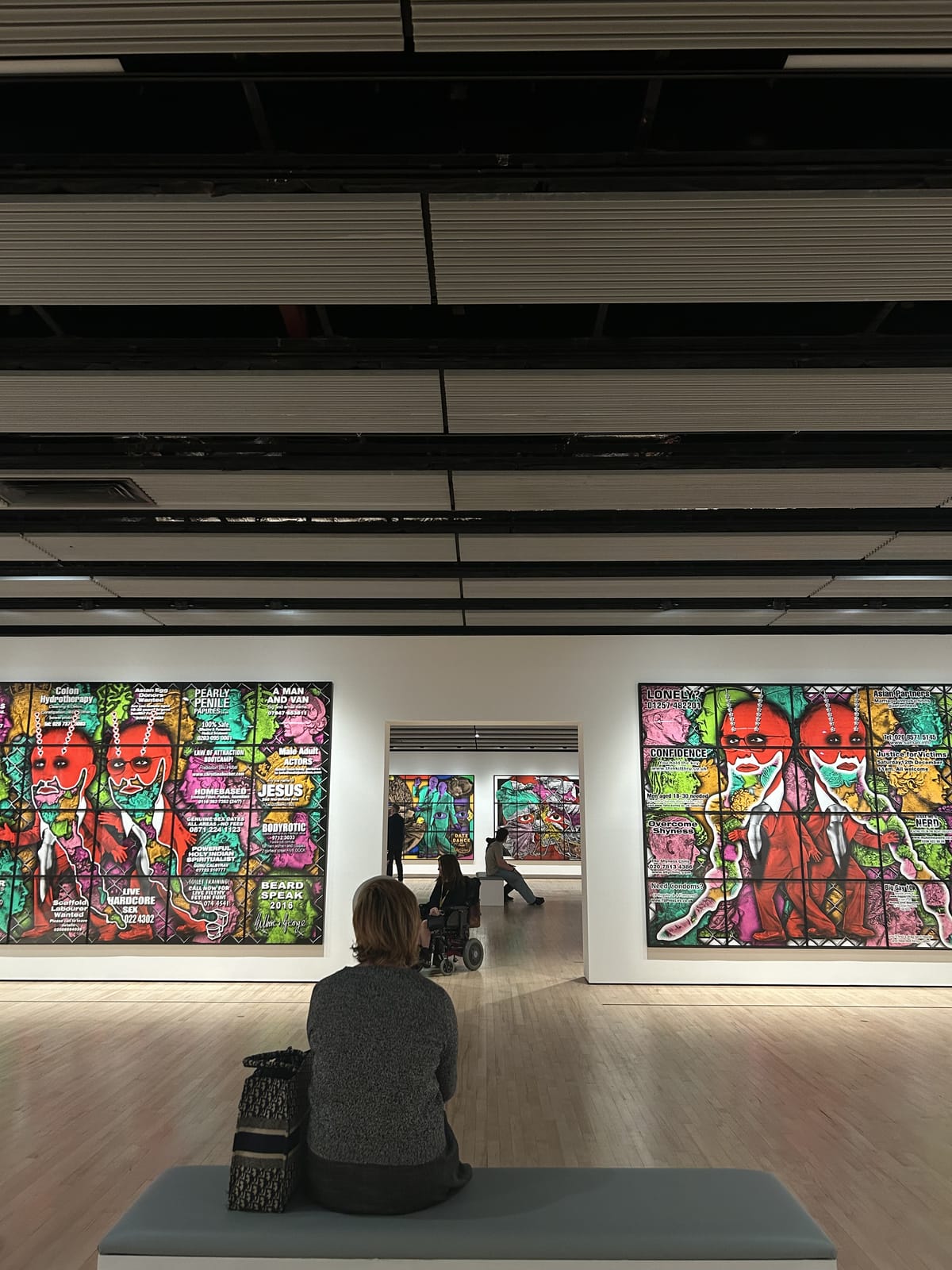
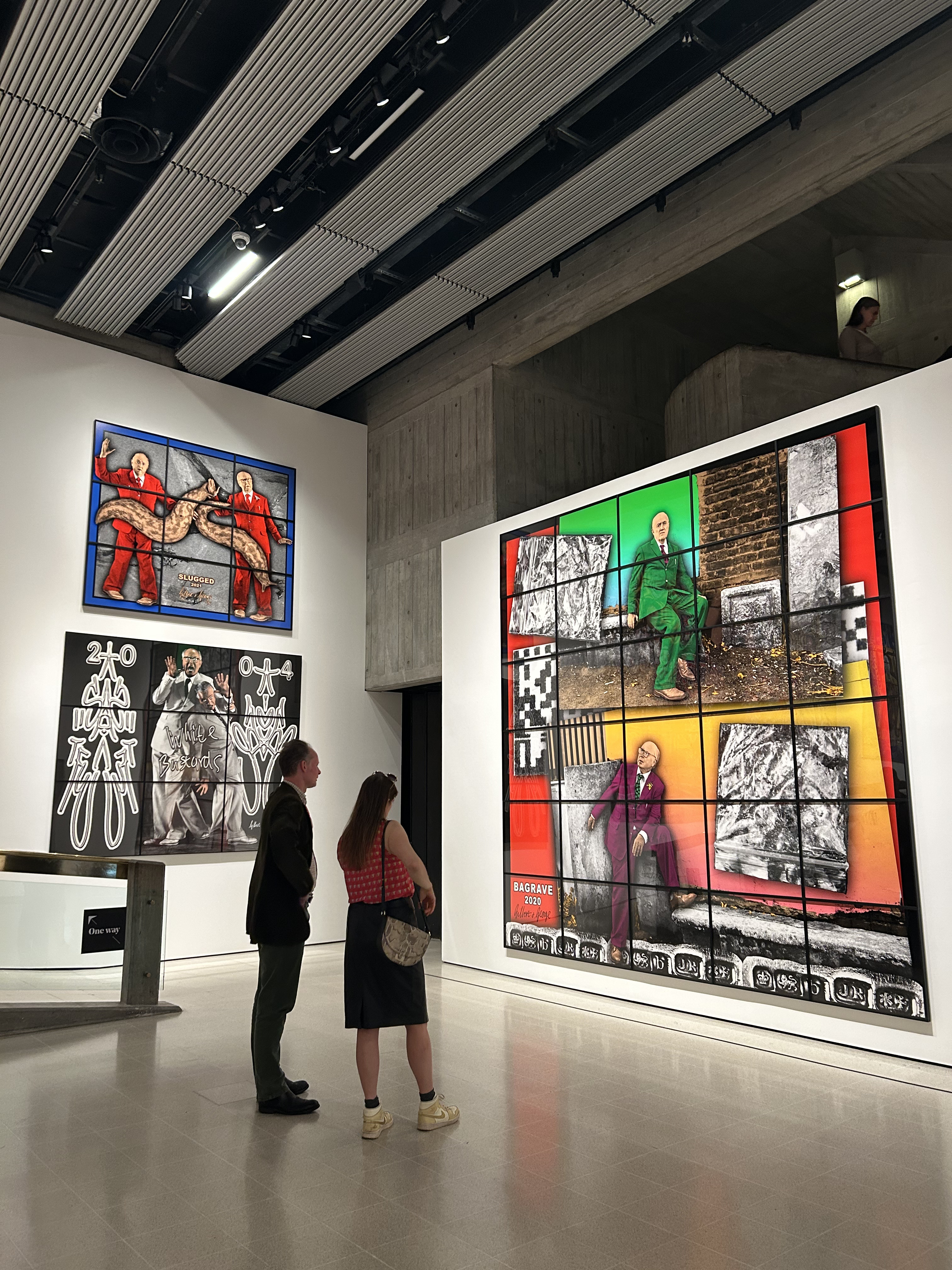
Gilbert & George: 21st Century Pictures has opened at the Hayward Gallery — the first major presentation of their latest series, created between 2021 and 2023. The exhibition brings together 104 large-scale works executed in the duo’s signature technique of digital photo-collage: acid colours, repeated figures, and grid compositions reminiscent of stained glass.
Gilbert & George are among the few British artists who have remained unwaveringly consistent in their methodology since the late 1960s: duo, image, city. They met in 1967 at St Martin’s School of Art and have never separated since. They live together, work together, and always appear together. They share one home, one daily routine, one life. When asked whether they are a couple, they reply — in the most British way possible — “We are two people who make up one artistic being.”
Since 2023, the pair have had their own museum, The Gilbert & George Centre, on Heneage Street, just a five-minute walk from their home. Even The Golden Heart, their local East London pub where they dine daily, appears in several works as part of the area’s urban mythology. This obsessive continuity is integral to their concept of being “living sculptures” — transforming their own existence into a total artwork. The myth endures: they wake up every day at 6 a.m., never eat at home, always wear suits, and rarely leave their neighbourhood.
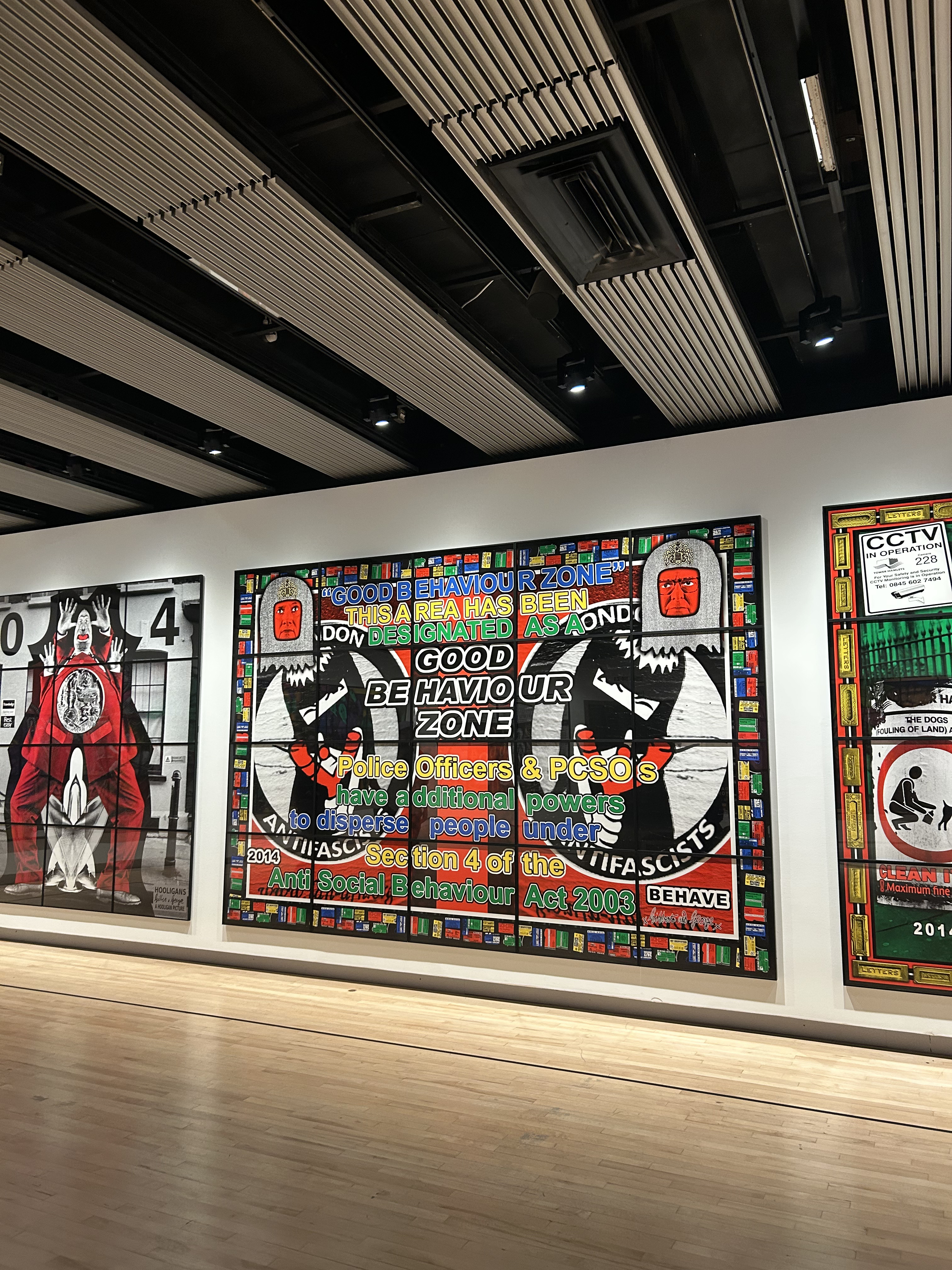
The imagery in their work is drawn entirely from their everyday routes: East London streets, litter, signs, tabloid headlines, graffiti, and commercial typography. They claim never to hire assistants, producing everything themselves from photography to post-production and printing. Their themes range from religion, politics, sexuality, and violence to urban language and mass media repetition. Words and phrases — often sourced from advertisements or slang — punctuate their compositions, evoking both specific socio-political contexts (like Brexit) and universal states such as shame, fear, and aggression.
One question lingers after the show: if these Victorian gentlemen of East London claim to reject travel, luxury, and material pursuits, where does their money go? Certainly not to their daily dinners at Nilly’s Turkish restaurant. They insist they are not bohemians and avoid the Mayfair art scene, yet their main partner is, of course, a commercial gallery. Their auction record stands at $3,760,402, with typical estimates ranging from £700,000 to £900,000 for large works — a true blue-chip phenomenon. What, then, do they do with the very capital they claim to resist?
A few curious facts:
- They have a rule: they never laugh in public.
- In 1969, at a student party, they stood on a table and sang “Underneath the Arches” — an old British song about homelessness — for five hours straight until their voices gave out. “We simply didn’t know what to do with our lives,” George later said, “so we kept singing until something changed.”
- They collect flattened chewing gum found on pavements.
- They refused to participate in Tate exhibitions throughout the 1970s and 1980s, calling the museum “an elitist cemetery for art.” Guess what? In 2007, Tate held their full retrospective.