Tracey Emin at Tate Modern
Tracey Emin’s retrospective at Tate Modern (supported by Gucci) was always going to be a blockbuster and a purpose for cultural tourism. A reason to come to London, or to renew your membership, so you don’t queue.
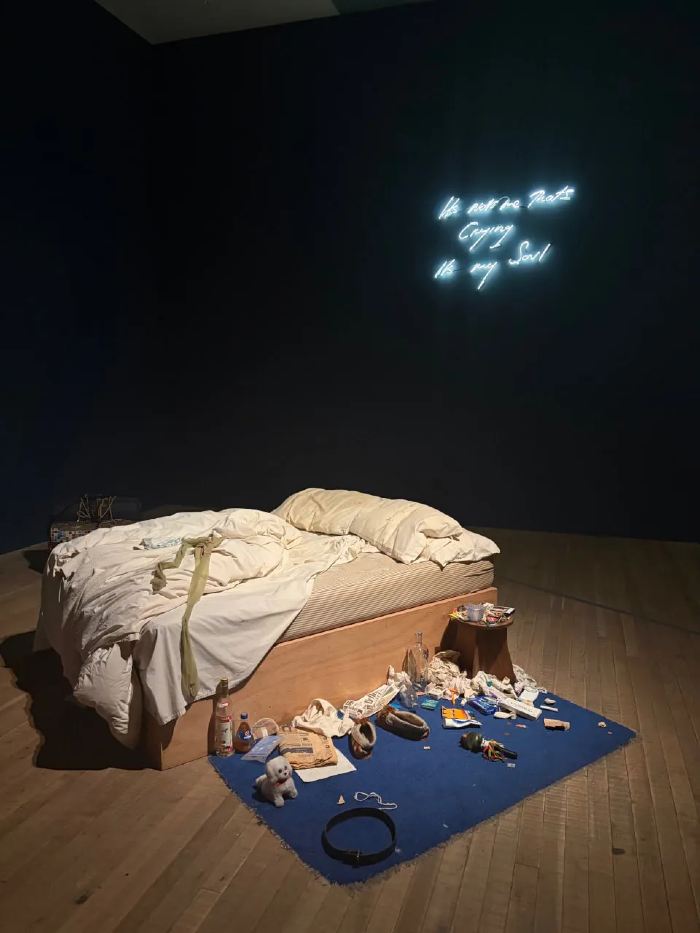
I went with particular anticipation. Tracey is for me an artist who, with fairly simple — universally resonant, and I mean that as a compliment, ideas and fairly simple (again, a compliment) technique, hits something that hurts. And yes, she was in the right place at the right time. Thatcher left in 1990 after 11 years, the country exhaled, and into that gap rushed the YBAs, Blair, Cool Britannia, Britpop, Sensation at the Royal Academy in 1997. Charles Saatchi built a collection, Jay Jopling opened White Cube, Tracey and Sarah Lucas opened The Shop in the East End. In 1999 a Turner Prize nomination with My Bed and a live television appearance drunk and swearing, and by the next morning, she was famous. But it wasn’t luck in a vacuum. It was also Tracey’s own fearlessness.
The curating is excellent. The dramaturgy is thematic rather than chronological — you move through what matters to the artist, not through dates. Take the audio guide, concise and well-made, and you’re accompanied through it by Tracey’s voice and the voices of people who built the show. Throughout, you have the uncomfortable feeling of being present at someone else’s therapy session or confession. If you’re empathetic, it will hurt. Tracey herself says people often distance themselves from pain, but you have to live through emotions to avoid remaining numb and detached. This is about birth, death, blood, the body, and violence. There’s almost no text on the walls. There doesn’t need to be — everything reads from somewhere below conscious thought.
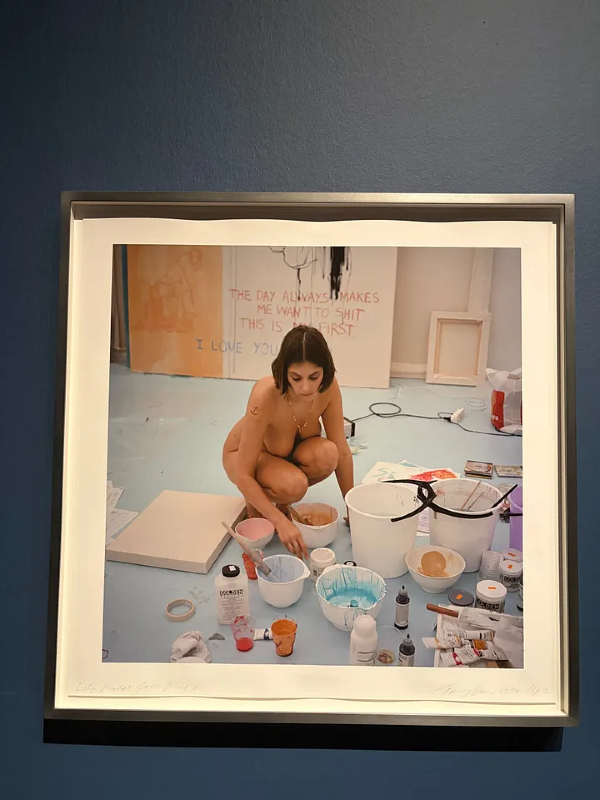
A touching video at the start: Tracey dancing, endlessly and gloriously badly. She never became a dancer. We are only glad. Her teenage experiences of the body and relationships were the first fuel for the art: life in coastal carefree Margate, British-style dating (pub, fish and chips, one-night stand). Portraits and endless self-portraits of a young Tracey — she is, of course, a phenomenally beautiful and sexual woman. Radiant with health, Mother Nature. And about that body and its transformations, we see a great deal: grief of loss, blood, menstruation, abortions, sexual violence, birth, and conversations with her own mother. A devastating work — a letter about the feeling of pregnancy, and tiny children’s shoes. By the middle of the exhibition, something starts pulling uncomfortably low in the stomach.
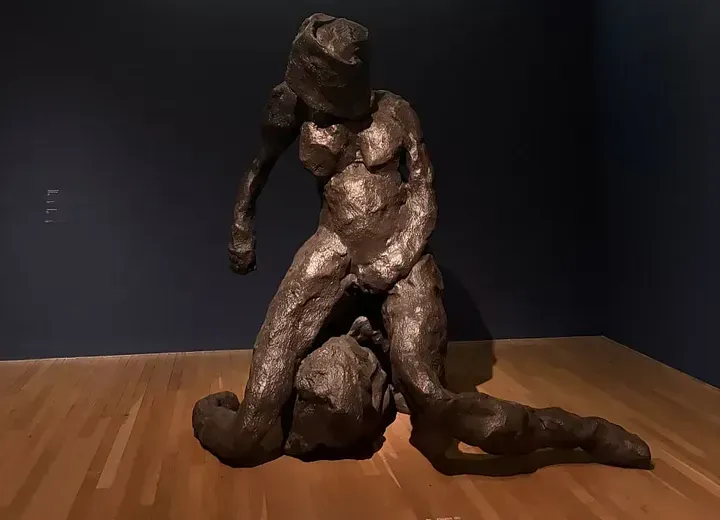
A lot of painting with eccentric titles like Rape or I Came. Tracey gives works their titles only once they’re finished. Particular thanks to the curators for the near-total absence of commercial neons and for including the bronze sculptures, which I, for one, had never seen in person.
The famous bed — unmade, bottles and condoms scattered — comes after a chilling corridor in which, on one side, Polaroids of the artist’s young healthy body, and on the other, photographs of a body ravaged by cancer in full medical detail.
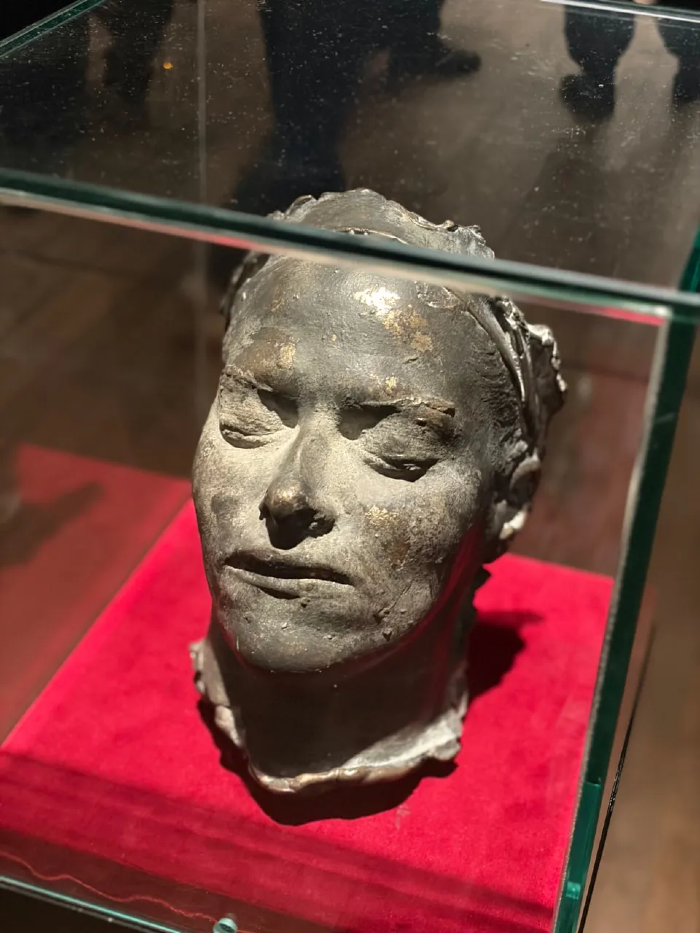
The whole exhibition is essentially autofiction and oversharing. Tracey was putting herself on display before social media existed. At the end, you meet her death mask, which she made at 34. And right before the gift shop (very Tate of them), there’s an invitation to speak to staff if you need a quiet space to sit with it, and wall text with numbers for cancer support, mental health, and help with violence.
And if you want to finish yourself off completely, in the visitor book at the exit, people write their own stories by hand.
Until 31 August.